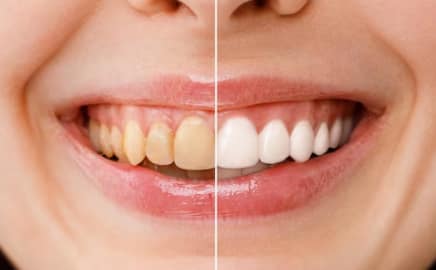
Teeth Whitening

What is Teeth Whitening?

Teeth whitening is one of the most popular cosmetic dentistry treatments offering a quick, non-invasive, and affordable way to enhance a smile.

What Causes Tooth Staining?

Age

There is a direct correlation between tooth color and age. Over the years, teeth darken as a result of wear and tear and stain accumulation.

Starting color

We are all equipped with an inborn tooth color that ranges from yellow-brownish to greenish-grey and intensifies over time.

Translucency & thinness

These are also genetic traits that become more pronounced with age. Teeth that are thinner and more transparent – most notably the front teeth – have less of the pigment that is necessary for bleaching.

Eating habits

The habitual consumption of red wine, coffee, tea, cola, carrots, oranges, citric foods, vinegar, and other deeply-colored beverages and foods causes considerable staining over the years.

Smoking habits

Nicotine leaves brownish deposits that slowly soak into the tooth structure and cause intrinsic discoloration.

Tetracycline chemicals

There is a direct correlation between tooth color and age. Over the years, teeth darken as a result of wear and tear and stain accumulation.

Excess fluoride consumption

Excessive consumption of fluoride causes fluorosis and associated areas of white mottling.

Grinding

Most frequently caused by stress, teeth grinding (gnashing, bruxing, etc.) can add to micro-cracking in the teeth and can cause the biting edges to darken.

Trauma

Falls and other injuries can produce sizable cracks in the teeth, which collect large amounts of stains and debris.

Why you should do Teeth Whitening?

Teeth whitening is a safe, life-enhancing process that can have a positive effect on both your physical appearance and psychological health. Here are the following reasons why you need to consider teeth whitening;

Who Are Not Eligible For Teeth Whitening

Outcome Of The Procedure

Once complete, the whitening procedure can achieve four to six shades of whitening after only one session. Some patients experience tooth or gum sensitivity after whitening, but this usually goes away within a day or two.

Conditions that you need tooth whitening

Benefits Of Teeth Whitening

What are Your Whitening Options?

In-Office Whitening

Significant color change in a short time is the major benefit of in-office whitening. This protocol involves the carefully controlled use of a relatively high-concentration peroxide gel, applied to the teeth by the dentist or trained technician after the gums have been protected with a paint-on rubber dam.

Duration : Generally, the peroxide remains on the teeth for several 15 to 20-minute intervals that add up to an hour (at most).

Professionally Dispensed Take-Home Kits

Take-home kits incorporate an easy-to-use lower-concentration peroxide gel. The lower the peroxide percentage, the longer it may safely remain on the teeth. The gel is applied to the teeth using custom-made bleaching trays that resemble mouth guards.

Duration : It remains on the teeth for an hour or longer (sometimes overnight).

Over-The-Counter Products

Over-the-counter bleaching involves the use of a store-bought whitening kit, featuring a bleaching gel with a concentration lower than that of the professionally dispensed take-home whiteners. The gel is applied to the teeth via one-size-fits-all trays, strips, or paint-on applicators.

Before and After

Before After
Before After
Before After

During The Teeth Whitening Procedure

Applying a gel

The dentist applies a gel made of 15% to 35% hydrogen peroxide to your front teeth. Hydrogen peroxide can penetrate the porous outer layer of your teeth and break apart stain compounds using a chemical reaction called oxidation.

Applying high-powered light

Depending on the whitening system being used, the application of the whitening gel may be followed by applying a high-powered light that speeds up the whitening process.

Reapplication of gel

Most systems involve multiple applications of the gel throughout the whitening session. The dentist will rinse off the gel and reapply a fresh coat as many times as necessary within the space of about 40 minutes.

Aftercare Teeth Whitening Procedure

After Care To Maintain Results For a Long Duration

Conditions

Risks of Teeth Whitening

Conditions

FAQ

FAQ's for Teeth Whitening

1. Who should use teeth whitening?
Generally, anyone with healthy gums and teeth that are looking to brighten up their smile can benefit from the professional teeth whitening system. It is highly effective at removing stains from teeth, including tobacco, coffee, tea, tetracycline, and various other tooth stains. A professional teeth whitening system will not affect existing dental work.
4. Does the whitening system work on Dentures or Veneers?
Typically the gel product is only applied to natural teeth, allowing these treated teeth to lighten up to match a cap, crown, or veneer.
2. Is tooth whitening bad for your teeth?
Studies of teeth whitening products using 10% carbamide peroxide showed no effect on the hardness or mineral content of a tooth’s enamel surface. Professional teeth whitening does not cause permanent damage to the enamel on your teeth and is considered harmless by most dental health professionals.
5. How many shades and whiter can I expect my teeth to get?
In general, the procedure can lighten up, teeth anywhere from 6 to 12 shades on the whitening shade guide.
3. How long do the teeth whitening effects last?
Those who avoid foods and beverages that stain may be able to wait one year or longer before another whitening treatment or touch-up is needed.
6. Does the treatment hurt?
Teeth whitening may cause sensitivity during or after treatment and slight discomfort in the gums. Both of these side effects are usually temporary and will disappear a few days after treatment.

Your Smile is Our Passion

Our Dentist Is Here For You

Scroll to Top